
Plantar xerosis and heel fissures affect roughly 20% of adults globally, with prevalence rising above 33% during dry winter months, according to dermatological research in the Journal of the European Academy of Dermatology and Venereology. The skin on human heels lacks sebaceous oil glands entirely, relying exclusively on sweat glands and epidermal lipids for hydration. When mechanical body weight compresses dry heel tissue, the brittle stratum corneum splits into painful vertical fissures. Vaidayu 100% Natural Crack Heal Cream pairs cold-pressed kokum butter with ricinoleic acid from castor oil and cooling Bhimseni Kapoor to restore the lipid barrier, relieve stinging pain, and repair deep cracks within 10 days.
If you have struggled with rough, bleeding, or snagging heels and found that petroleum-based lotions only sit on the surface without actually repairing the tissue, this guide explains why heels crack, how Ayurvedic botanical lipids heal deep plantar fissures, and how to follow an evidence-backed nightly foot care routine for lasting relief.
Why do heels crack? The science behind plantar fissures
Heel fissures develop when two factors collide: severe epidermal dehydration (xerosis) and mechanical pressure from standing, walking, or wearing open-back footwear. Unlike facial or bodily skin, the soles of your feet have zero sebaceous glands to produce sebum. The skin here is up to 20 times thicker than elsewhere on the body, structured with a heavy stratum corneum designed to withstand load. When moisture levels in this thick outer layer drop below 10%, the keratin protein matrix turns rigid, losing its natural tensile elasticity.
With every step you take, the subcutaneous fat pad underneath your calcaneus (heel bone) expands sideways to disperse shock. Healthy, elastic skin flexes with this expansion. Dehydrated, callused skin cannot stretch; under the lateral force of your body weight, it cracks open. If left untreated, these hairline splits deepen through the epidermis into the living dermis, exposing sensitive nerve endings and capillary loops. This leads to sharp pain, bleeding, and potential bacterial or fungal infection.
The Ayurvedic perspective on Padadari
In classical Ayurvedic medicine, cracked heels are classified as Padadari, a condition documented extensively in the Charaka Samhita under minor ailments (Kshudra Roga). Ayurveda attributes cracked heels primarily to an aggravated Vata dosha. Vata embodies the elemental principles of air and space, carrying the distinct biological qualities of dryness (Rukshata), roughness (Kharata), and coldness (Sheetata).
When Vata spikes, whether due to seasonal dry winter winds (Hemanta Ritu), barefoot walking on rough floors, excessive physical exertion, or a lack of unctuous dietary fats (Sneha), it drains the moisture from the body’s peripheral channels. The soles of the feet, being furthest from the core, suffer first. Classical Ayurvedic management counters this dry Vata imbalance through intensive Snehana (deep oleation with unctuous plant butters and oils) and Ropana (tissue-healing botanicals) that drive nourishment deep into the micro-channels (Srotas) of the cracked heel tissue.
Common triggers that accelerate heel cracking
Beyond natural seasonal dryness, several daily lifestyle factors worsen heel fissures:
- Prolonged standing on hard flooring: Concrete, tile, and hardwood floors exert continuous pressure on the plantar fat pad, forcing it outward against dry skin.
- Open-backed sandals and slip-on slippers: Footwear without heel counters allows the fat pad to spread sideways without support, drastically accelerating the mechanical splitting of the heel rim.
- Hot showers and harsh chemical soaps: Frequent exposure to hot water and sulfate-based cleansers washes away the scarce natural moisturizing factors (NMF) and intercellular ceramides produced by plantar skin cells.
- Metabolic conditions: Individuals with diabetes or thyroid imbalances experience reduced sweat gland function (autonomic neuropathy), which causes chronic plantar dryness and requires dedicated lipid-barrier care.
Why standard petroleum foot creams fail to heal deep cracks
Most commercial foot creams found in pharmacies rely heavily on white petroleum jelly (petrolatum), mineral oil, and synthetic emulsifiers. While petroleum jelly creates a dense water-impermeable barrier on the skin, it does not provide active biological lipids, fatty acids, or nutrients to damaged dermal cells. It acts merely as an inert plastic wrap: preventing water from escaping, but doing nothing to soften stubborn keratin calluses, stimulate fibroblast collagen synthesis, or fight bacterial colonization in open wounds.
Furthermore, mineral oils cannot penetrate the thickened stratum corneum of the feet. They remain greasy on the surface, rubbing off onto bedsheets and socks within minutes of application. True heel repair requires bio-compatible plant lipids with low molecular weights and diverse fatty acid profiles that can pass through hardened keratin plates, rebuild the intercellular lipid bilayer, and deliver bioactive wound-healing compounds directly to the split tissue.
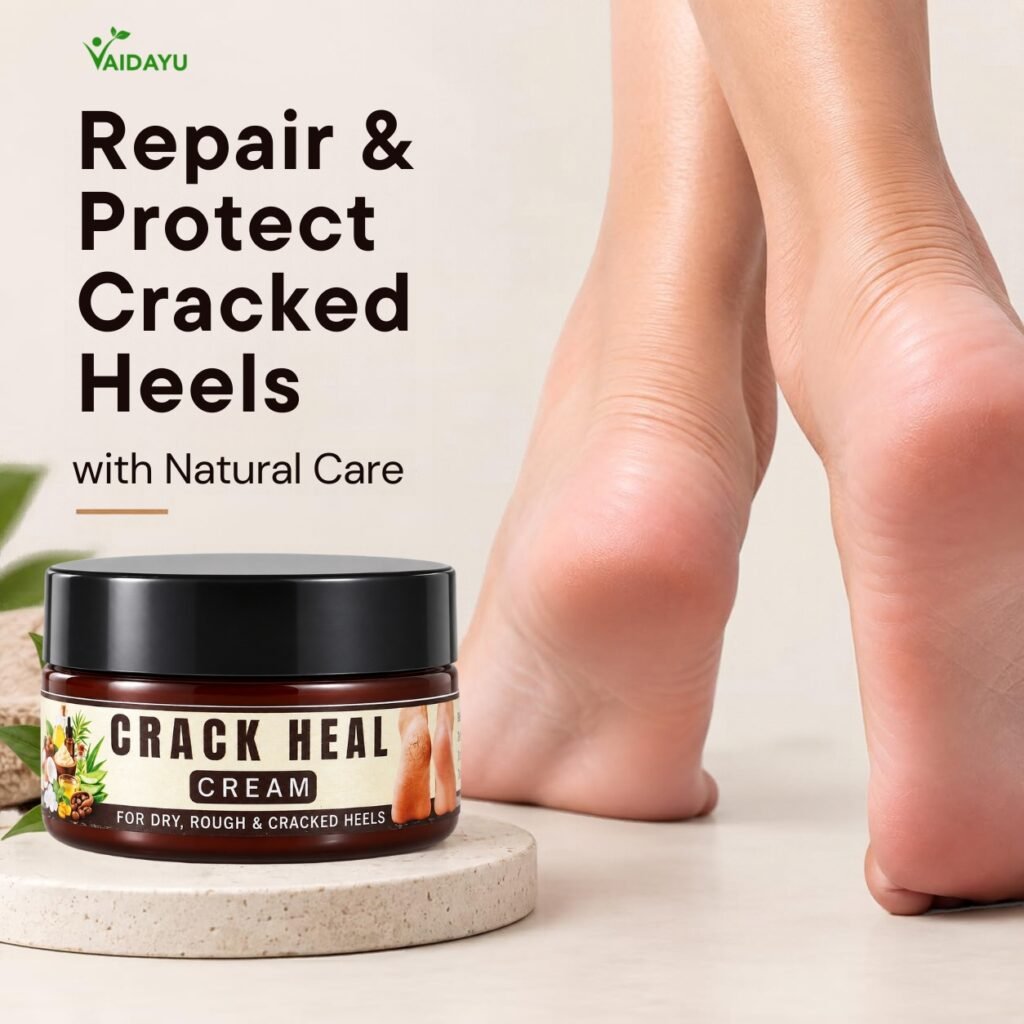
100% Natural Crack Heal Cream | Ayurvedic Heel Cream for Dry, Rough & Cracked Feet
Restore soft, healthy feet in just 10 days.
VAIDAYU 100% Natural Crack Heal Cream is a deeply penetrating, handcrafted foot balm designed to heal rough, painful fissures and stubborn calluses. Powered by pure Kokum Butter, Shea Butter, cooling Bhimseni Kapoor, and antibacterial Tea Tree Oil, it locks in continuous hydration while soothing tired feet.
Visible Results in 10 Days on rough, cracked heels
Deep Hydration & Lipid Repair: Kokum Butter + Shea Butter + Castor Oil
Instant Cooling Sensation: Pure Menthol & Bhimseni Kapoor
100% Natural, Handmade & Paraben-Free
The 10 healing ingredients in Vaidayu Crack Heal Cream
Vaidayu 100% Natural Crack Heal Cream is formulated around an Ayurvedic synergy of 10 pure plant butters, cold-pressed seed oils, and therapeutic botanical extracts. Each active component plays a specific functional role in softening hard skin, repairing fissures, cooling irritation, or defending against infection.
1. Kokum Butter (Garcinia indica): the master heel softener
Derived from the fruit kernels of the indigenous tree native to the Western Ghats of India, kokum butter (known in Ayurveda as Vrukshamla Beeja Taila) is considered among the most therapeutic natural plant butters on Earth. It contains up to 56% stearic acid and 40% oleic acid, providing a solid, stable triglyceride profile that melts precisely at human body temperature (34 to 38 degrees Celsius).
A landmark clinical review published in the Indian Journal of Pharmaceutical Sciences demonstrated that kokum butter possesses exceptional emollient properties and accelerates epithelial regeneration. When massaged into thick heel skin, it melts into the micro-fissures, delivering cellular nourishment without leaving a greasy residue. Its high concentration of natural antioxidants, including garcinol, suppresses inflammatory markers and protects regenerating epidermal cells from oxidative stress.
2. Shea Butter (Vitellaria paradoxa): barrier repair powerhouse
While native to West Africa, pure unrefined shea butter provides the exact concentrated unctuous (Snigdha) density required in Ayurvedic therapy to neutralize aggravated Vata dryness. Shea butter is exceptionally rich in unsaponifiable fractions, specifically triterpene alcohols (lupeol, amyrin) and phytosterols.
Clinical studies in dermatological wound healing confirm that triterpenes in shea butter significantly decrease epidermal trans-water loss (TEWL) and stimulate collagen deposition in split skin. By replenishing the intercellular ceramides between keratinocytes, shea butter restores structural integrity to the heel rim, making the skin pliable enough to bear weight without cracking.
3. Castor Oil (Ricinus communis): deep-penetrating callus breaker
In Ayurvedic pharmacology, castor oil (Eranda Taila) is revered for its Sukshma (subtle and deep-penetrating) property. It is unique in the plant kingdom because roughly 90% of its fatty acid composition consists of ricinoleic acid, an uncommon 18-carbon monounsaturated fatty acid bearing a hydroxyl functional group.
This hydroxyl group gives ricinoleic acid unusual polar humectant qualities: it draws ambient moisture into dense skin layers while forming an occlusive protective cushion on top. Because of its high viscosity and low surface tension, castor oil seeps past stubborn hyperkeratotic calluses that block standard moisturizers, softening hardened outer rings of dead skin so natural tissue renewal can proceed.
4. Pure Coconut Oil: the natural antimicrobial emollient
Cold-pressed virgin coconut oil contains medium-chain triglycerides (MCTs), predominantly lauric acid (48% to 52%) and caprylic acid. Lauric acid converts on contact with skin into monolaurin, a potent antimicrobial compound that breaks down the lipid membranes of bacteria and dermatophyte fungi that commonly invade cracked foot fissures.
A study in the medical journal Dermatitis confirmed that virgin coconut oil significantly improves skin barrier function and increases surface lipid levels in xerosis patients, outperforming mineral oil in both speed of hydration and skin safety.
5. Bhimseni Kapoor (Pure Camphor): cooling pain relief and circulation boost
Unlike synthetic chemical camphor synthesized from turpentine, Bhimseni Kapoor is 100% natural, crystalline camphor extracted directly from the wood of Cinnamomum camphora. In classical Ayurveda, natural camphor is classified as Sheetaveerya (cold in potency) and Dahaprashamana (alleviator of burning sensations).
Deep heel cracks frequently ache, itch, or throb with a sharp burning sensation after standing. Bhimseni Kapoor stimulates local cutaneous cold receptors (TRPM8 channels), immediately dampening pain perception. Simultaneously, it induces mild local vasodilation, increasing micro-capillary blood circulation to the heel bed. This surge of nutrient-rich blood delivers oxygen and immune cells directly to the split dermal base to accelerate cellular repair.
For a complete bathing routine that extends these soothing camphor benefits to the entire body, explore our guide on the healing properties of Bhimseni Kapoor soap benefits for skin.
6. Pure Menthol: soothing anti-inflammatory refreshment
Extracted naturally from wild field mint (Mentha arvensis), pure menthol works synergistically with Bhimseni Kapoor. Menthol provides an immediate, invigorating cooling sensation that numbs the sharp stinging experienced when stepping onto an open heel fissure. It relieves foot fatigue, deodorizes sweaty soles naturally, and diminishes the histamine response responsible for persistent itching in dry callused heels.
7. Aloe Vera Gel: cellular regeneration and wound closure
Fresh aloe vera extract contains two key bioactive polysaccharides: glucomannan and acemannan. Glucomannan interacts directly with fibroblast growth factor receptors, stimulating fibroblast proliferation and boosting type-I and type-III collagen synthesis across the crack floor.
A randomized trial in the journal Burns established that acemannan accelerates wound closure by up to 35% compared to untreated controls. Aloe vera also delivers essential vitamins (A, C, and E) and zinc directly to split heel tissue, giving repairing cells the raw micronutrients needed to weave new, resilient skin across the fissure.
8. Vegetable Glycerine: nature’s moisture magnet
Vegetable glycerine is a trihydroxy alcohol that functions as an ultra-potent hygroscopic humectant. It attracts water molecules from the atmosphere and from deeper dermal layers, binding them directly into the intercellular stratum corneum matrix. Studies published in the Journal of Investigative Dermatology demonstrate that glycerine normalizes desquamation (the shedding of dead skin cells) in severely dry skin by activating skin-bound transglutaminase enzymes, preventing thick, scaly calluses from reforming.
If your feet struggle with generalized dryness, washing daily with a high-purity glycerin cleanser is an essential foundation. Read our comprehensive analysis of the best glycerin soap for dry skin in India to understand how gentle humectant cleansing protects your skin barrier before you apply creams.
9. Tea Tree Essential Oil: fungal and bacterial defense
Deep heel fissures are open wounds exposed to floor dust, dirt, and shoe friction. In warm, humid environments, these fissures are prone to bacterial colonization by Staphylococcus aureus or fungal overgrowth by Trichophyton mentagrophytes (the fungus responsible for athlete’s foot).
Pure tea tree essential oil contains over 40% terpinen-4-ol, a monoterpene with broad-spectrum antimicrobial, antifungal, and antiseptic efficacy proven across dozens of clinical trials. It sanitizes open heel fissures naturally without stinging or delaying tissue re-epithelialization, keeping your heels hygienic and healthy throughout the healing cycle.
10. Vitamin E (D-Alpha Tocopherol): antioxidant cellular shield
Vitamin E is the human body’s primary lipid-soluble antioxidant. Within cracked foot tissue, lipid peroxidation triggered by mechanical stress damages cell membranes and impedes healing. Natural Vitamin E neutralizes free radicals, stabilizes cell membrane integrity, and works in tandem with kokum butter to restore natural elasticity to stressed foot skin, preventing fresh splits from forming under daily walking pressure.
The 10-day heel repair protocol: step-by-step daily routine
To achieve visible heel repair in 10 days, consistency and proper technique matter as much as the formulation itself. Follow this simple 3-step nightly routine right before bed:
Step 1: The warm soak and gentle dead-skin softening (5 to 10 minutes)
Fill a basin with lukewarm water. Never use hot water, as excessive heat strips away natural lipid ceramides and worsens xerosis. Add a small pinch of natural rock salt or a few drops of mild herbal cleanser to soften hardened calluses. Soak your feet for 5 to 8 minutes.
After soaking, use a natural pumice stone or soft foot file to gently buff the outer callus rim. Crucial caution: never aggressively file or scrape open, bleeding cracks. Buff only the hard, yellowed dead skin surrounding the fissures to reduce lateral tension. Pat your feet thoroughly dry with a clean cotton towel, paying special attention to the spaces between your toes.
Step 2: Deep massage application with Vaidayu Crack Heal Cream
Scoop a generous marble-sized amount of Vaidayu Crack Heal Cream. Warm it between your fingertips for five seconds to allow the kokum and shea butters to soften. Apply the cream directly over your heels, calluses, and dry soles.
Use your thumbs to massage the balm into the skin using firm, circular upward strokes for 2 to 3 minutes. Focus pressure along the outer heel perimeter and work the cream directly into deep cracks. This massage stimulates local blood circulation and forces the bioactive ricinoleic and stearic fatty acids deep into the epidermal layers.
Step 3: Overnight occlusion with clean cotton socks
Immediately after massaging in the cream, put on a pair of clean, breathable 100% cotton socks. This step, known clinically as occlusion therapy, is vital. The cotton socks prevent the botanical oils from transferring onto your bedsheets, retain body warmth to keep the plant butters melted, and dramatically enhance the transdermal penetration rate of the active ingredients overnight.
Leave the socks on throughout the night. By morning, you will notice that the cream has completely absorbed, leaving your heels noticeably softer, smoother, and completely free of morning tightness.
What to expect over 10 days of consistent use
Clinical results develop progressively as the 10 botanical actives repair different layers of plantar tissue:
- Day 1 to 2 (Immediate relief): Bhimseni Kapoor and menthol halt the burning sensation and throbbing pain within minutes of application. Plantar skin feels refreshed, supple, and hydrated the following morning.
- Day 3 to 5 (Softening and closure): Hard, brittle callus edges around the cracks soften noticeably. Surface micro-fissures begin closing as shea butter and aloe vera stimulate fibroblast collagen synthesis. Bleeding stops completely.
- Day 6 to 8 (Tissue regeneration): Deep heel fissures fill in and bridge over with fresh, healthy epithelial tissue. The yellow, hyperkeratotic skin rim fades to a natural, smooth pink tone as castor oil and kokum butter normalize cell turnover.
- Day 9 to 10 (Restored elasticity): Heel skin regains its natural flexibility and tensile strength. Feet feel touchably soft, smooth, and resilient under daily walking pressure without snags on bedsheets or socks.
Crack heal cream vs petroleum jelly vs urea creams
Understanding how different foot care products function helps you choose the right solution for long-term foot health:
| Feature / Metric | Vaidayu Crack Heal Cream | Petroleum Jelly (Vaseline) | 20% to 40% Urea Foot Creams |
|---|---|---|---|
| Core Ingredients | 100% Pure Kokum Butter, Shea Butter, Castor Oil, Bhimseni Kapoor | 100% White Petrolatum (mineral crude oil derivative) | Synthetic urea, emulsifying wax, parabens, preservatives |
| Mechanism of Action | Delivers bio-compatible fatty acids and plant sterols that rebuild lipid bilayers | Inert occlusive seal; blocks moisture evaporation without cellular nutrition | Chemical keratolytics that dissolve keratin bonds between dead skin cells |
| Absorption & Texture | Fast-absorbing, non-sticky, melts smoothly into skin fissures | Extremely greasy, leaves a slippery film, stains clothing and sheets | Often chalky or watery; can sting intensely on open, bleeding cracks |
| Open Wound Safety | Completely safe; tea tree sanitizes while aloe vera and camphor heal | Can trap anaerobic bacteria inside dirty open cracks | Frequently burns and irritates open or bleeding fissures |
| Chemical Additives | Zero parabens, zero mineral oils, zero silicones, zero artificial fragrances | Derived from petrochemical refining processes | Contains synthetic preservatives, stabilizers, and chemical fragrance |
Frequently asked questions about cracked heel care
How long does it take for deep cracked heels to heal?
Most mild to moderate cracked heels heal within 7 to 10 days of consistent nightly application of a lipid-rich botanical foot cream paired with cotton socks. Severe, bleeding fissures that penetrate into the dermis typically require 14 to 21 days of continuous daily treatment to heal completely.
Can I apply crack heal cream on open, bleeding cracks?
Yes, provided the cream uses pure, natural botanicals. Vaidayu Crack Heal Cream contains tea tree oil and aloe vera, which naturally sanitize open cracks and accelerate healing without chemical burning. However, if a crack shows signs of severe bacterial infection such as pus, expanding red streaks, or intense swelling, consult a medical doctor promptly.
Why do my heels crack even in summer?
While winter cold is the most common trigger, summer heel cracks are caused by open-backed sandals, flip-flops, walking barefoot on tile floors, and exposure to chlorinated pool water. Open footwear allows the heel pad to expand laterally with each step, splitting dry skin even in hot weather.
Can diabetics use this Ayurvedic crack heal cream?
Yes. Diabetic individuals frequently suffer from anhidrosis (absence of foot sweating) due to autonomic neuropathy, making daily foot moisturization vital to prevent ulcers. Vaidayu Crack Heal Cream is formulated with gentle plant butters, castor oil, and tea tree oil, making it safe and beneficial for diabetic foot care. Inspect your feet daily and avoid sharp foot rasps.
Do I need to wear socks after applying the cream?
Wearing clean cotton socks after application is strongly recommended, especially during the first 10 days of treatment. Socks prevent the cream from rubbing off on bedding, maintain warm temperature to enhance absorption, and protect open fissures from airborne dust and friction.
Is this cream suitable for rough elbows and dry knees?
Yes. The concentrated blend of kokum butter, shea butter, and castor oil makes this cream equally effective on rough, callused elbows, cracked knuckles, and dry knees that require intensive lipid nourishment.
Putting it all together: your path to soft, pain-free feet
Cracked heels are not merely a cosmetic blemish; they are compromised skin barriers that cause genuine discomfort and risk infection if ignored. Rather than masking the issue with inert petroleum jellies that rub off without healing, choosing an authentic Ayurvedic formulation tackles both the biological cause and the painful symptoms.
By harnessing the proven fatty-acid chemistry of kokum butter, the deep-penetrating power of castor oil, and the immediate soothing coolness of pure Bhimseni Kapoor, you provide your skin with the exact building blocks needed to mend splits and rebuild resilience. Commit to the 3-step nightly routine for just 10 days, and experience the transformative comfort of soft, healthy, crack-free feet.
For individuals building a complete chemical-free personal care routine, pairing your foot care with the right handcrafted body cleanser is essential. Explore our detailed guide on how to choose the right handmade soap for your skin type to ensure every product touching your skin supports its natural protective barrier.